
Bathroom Matters
Every square inch. Even that one.

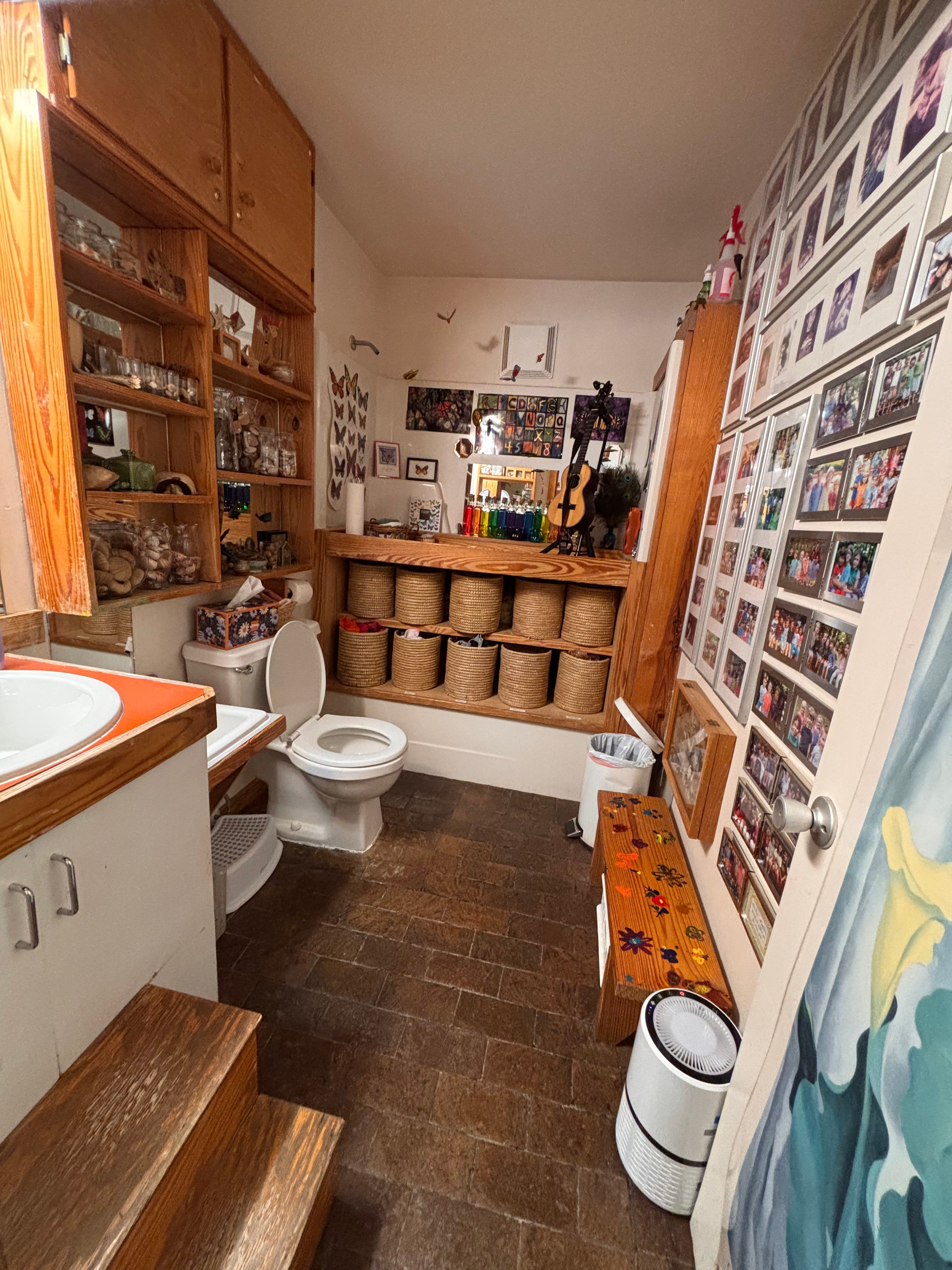
I’m still thinking - constantly - about my time at Children First (which Susan wrote about here.) Being able to witness a group of children so immersed in an experience that is constantly communicating to them that they have a tremendous abundance of options regarding how they spend their day was a real gift. Donna King told us that this may be the most important aspect of what children are developing during their years at the school - a sense of what to draw on in deciding what you want to do. To apply Tim Snyder’s language, I think that what children are learning and growing and practicing is sovereignty. Developing this, Snyder says, is fundamental to a practice of freedom.
As Susan wrote, this is something that was communicated and strengthened in every square inch of the Children First environment. The message sang through corners large and small, high and low.
One small space that particularly struck me was the bathroom.
It’s not often that I notice a bathroom space in anything but its most functional sense - but this one captured me on first glance. It was warm and homey, which shouldn’t have surprised me: that was true of everything across the campus, itself an extension of Donna’s home (or is Donna’s home an extension of Children First? They are one.) Donna told us that she was committed to creating spaces where you weren’t worried about what you would run into if your eyes were to wander - an idea that has definitely troubled my relationship with my office space since I returned home. There is a small guitar and beautifully organized materials alongside images of a diverse and beautiful world. And sitting right across from the toilet - in the line of vision of anyone sitting on the seat - is photographs of every child who has gone to the school across its each of its years.
As soon as I saw the space I thought back on a Studio conversation where a teacher was talking about the bathroom at her school - how someone had chose to “decorate” it with a poster emphasizing school rules. That meant that the momentary refuge she was seeking - that she had a right to - was invaded by demands for compliance.
adrienne maree brown tells us that when we trust the people they will become trustworthy, or boundaries will become clear. Holding the Children First bathroom next to the one described by that teacher makes clear that how we respect boundaries is part of how we communicate and establish that trust. That bathroom’s “one square inch” indicated to each child that they belong there and so did every other child; that they were participating in and creating something that had a history that they were a part of making; that they had a right to boundaries (including that small beautiful space they were holding in that particular moment) and that there was a warmth to welcoming others - including people they hadn’t met yet - into a shared, trusting, beautiful world.
May Children First’s bathroom ethos influence a sense of trust, boundaries, and freedom well beyond its walls!
The Studio for Playful Inquiry is an online community dedicated to exploring these ideas. Members (including the Children First teachers) are educators from around the world who are eager to welcome you into the space. If you’re not yet a member, I hope you’ll join us today.
Registration is now open for next year’s Leading Playful Inquiry cohort. Past project participants have been enthusiastic about the experience: If you’re considering joining, I’d be happy to respond to any questions.