
Depending on Imagination
Lead! Retreat! Surrender!

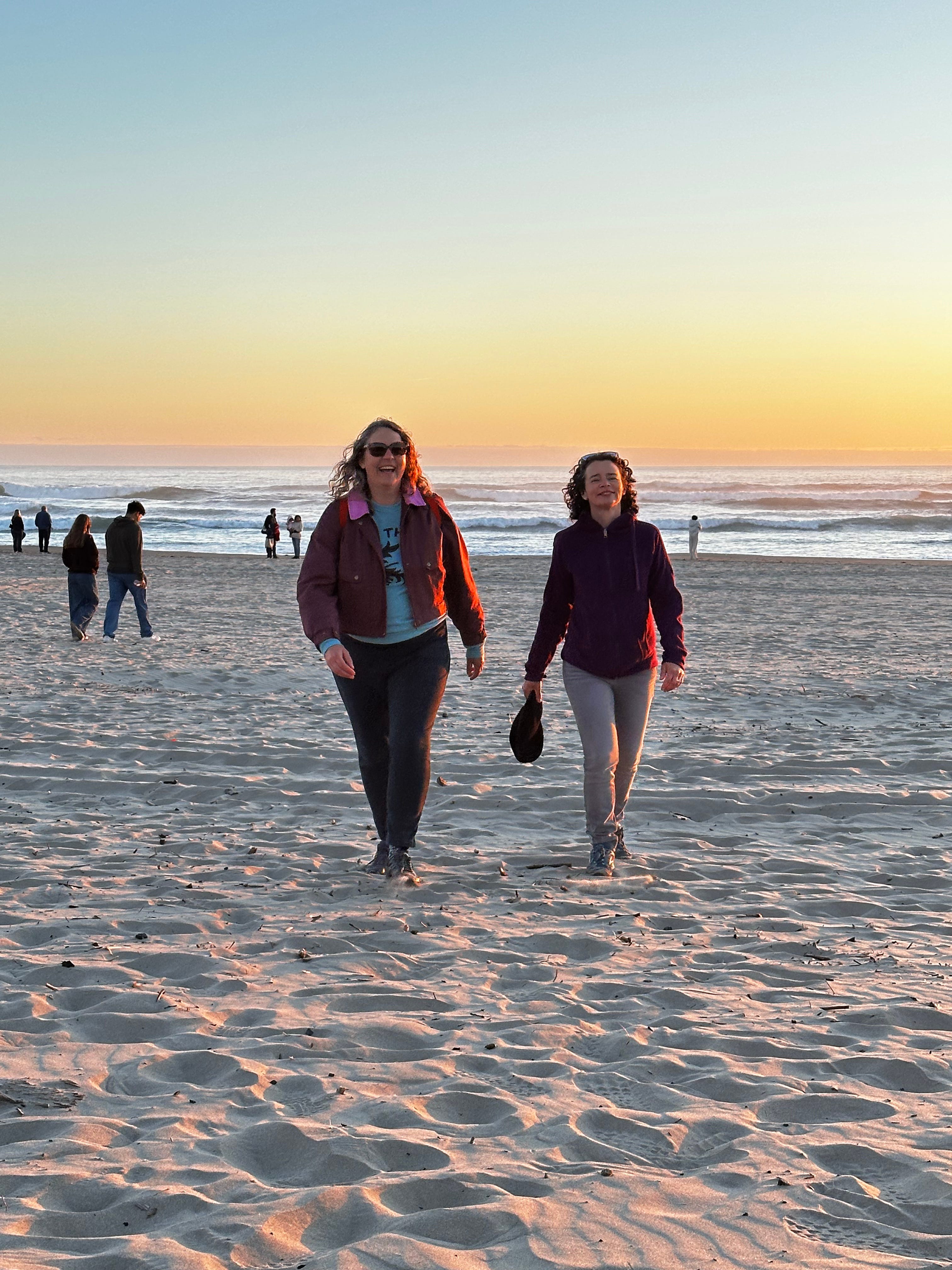
Susan and I hosted a retreat on the Oregon Coast for members of the Leading Playful Inquiry project earlier this month. It was a sumptuous gathering of leaders from around the world that left me with fresh thoughts about the work we’ve been exploring in our In.Dependence Studio Camp.
In the Camp, we’ve been reading Ruha Benjamin’s Imagination: A Manifesto. Benjamin’s book takes the radical imagination seriously, advancing play’s power to see beyond the constraints of the world as it is constructed today so we can bring about the world we want to live in. The book calls on us to think in different ways, collectively - to not only shine a light on what is broken, but on how we are making something beautiful - to transform worlds “out there” and “in here”.
Imagination: A Manifesto portrays the dangers of imagination battles dominated by techno-broligarchs. Benjamin leads the reader to question who has the right to dream and which dreams qualify as reasonable. It reminds me of how author Rene Denfeld describes imagination as an essential survival strategy.
I imagine that most readers of this piece have considered the role of imagination in early childhood and have landed strongly in solidarity with the rights of young dreamers. But we need to recognize that the imagination of adults is under severe strain. On what does the invigoration of the imagination of adults depend? How might we support the imagination of those who strive to lead playful inquiry?
Our time together at the retreat - and, indeed, our time together throughout the project - leads me to recognize that that imagination begins for those leaders with questions of identity. For many, it starts with recognizing themselves as leaders - a step complicated by sexism and childism, by the denigration of care and care givers, that leaves too many with a strong sense of imposter syndrome. Many of the people we work with came to the field to work with children and have found themselves in positions that involve supporting other adults. Things aren’t going smoothly - and they feel like that must be their fault. They are ready to be handed solutions.
Gathering with others and looking around the room helps relieve some of that weight and shift expectations. They see that others who they immediately hold in high esteem - working in a wide range of settings all around the world - are facing similar struggles. It’s an example of what the authors of On Courage: How To Be A Dissident In An Age Of Fear refer to as the Minyan Effect: Being with others diminishes isolation, offering “reminders from people of shared moral fiber of what is and isn’t normal. The goal of these groups isn’t to stop having moral collisions, but to have people with whom to process them, to give them structure, and to push back.” In community we are able to practice balancing, as Prentis Hemphill offered in a recent podcast, will and surrender.
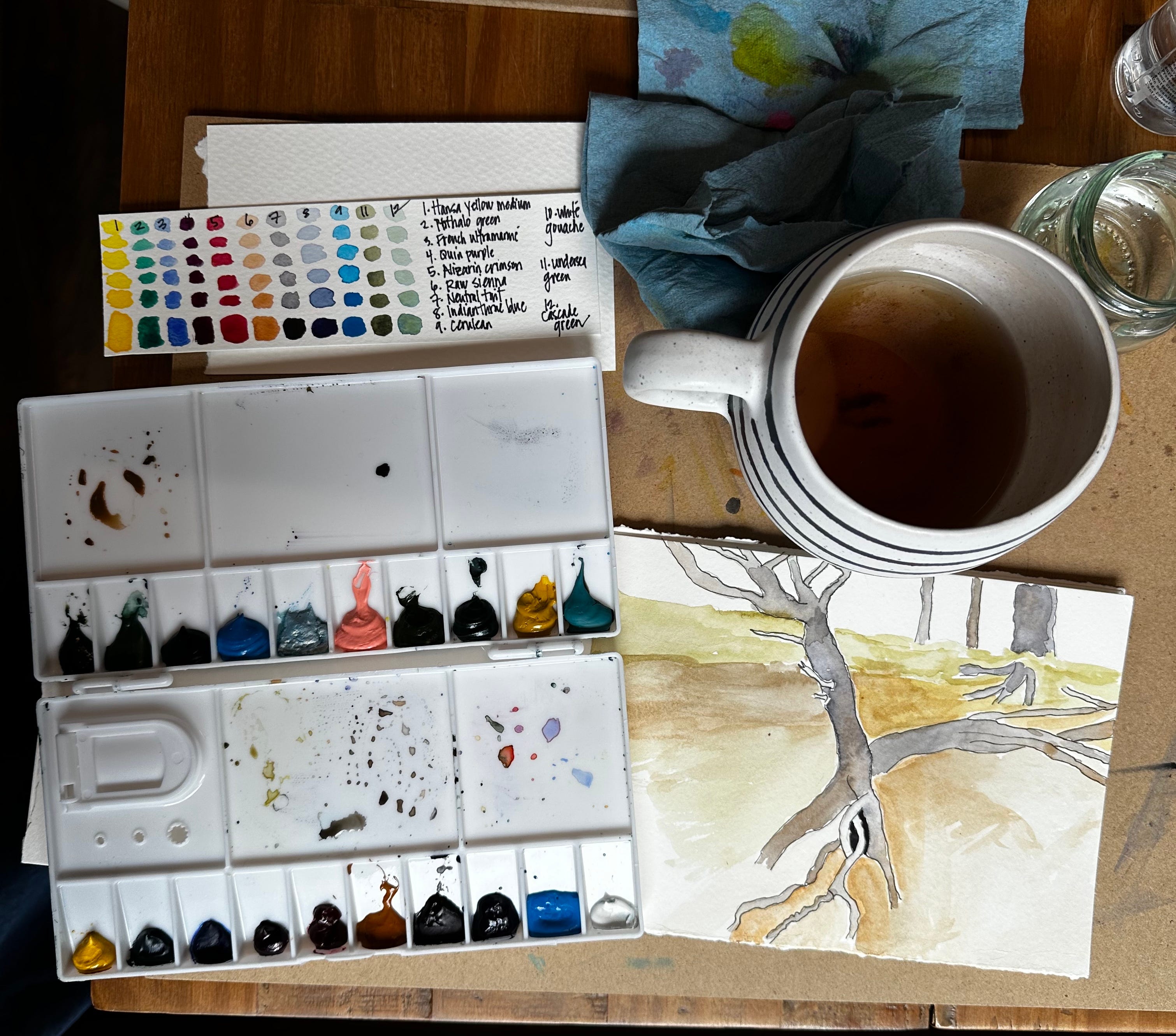
That process, in our experience, depends on seeing beyond certainty - and the tools of the arts (including poetry) are essential for that. Our time at the beach was filled with poems and paintbrushes, provoking visceral encounters with uncertainty, surprise, and mystery - connections that lead each participant to discover that they have something to contribute to the circle and that everyone else does, too.
We find a surprising power that comes from bringing people together across settings. There is an important grounding in the specifics of each individual’s conditions, absolutely: And having that weighed across spaces heightens that power while offering insight into patterns. It’s about being rooted in place and across places. Stories helped here, found in connections to text, place, and artifacts.
At a Studio for Playful Inquiry Meet-Up last week, a participant reflected on her experience in the retreat. She described it as socially, spiritually, and ecologically yummy: a banquet; a fortifying dream. I felt so validated and seen - which made me realize that this was something I had been missing!
This, I think, is what expanding imagination depends on. It’s a deeply felt sense that everyone involved can rely on when encountering the next unknown; an alternative to blaming themselves when bumping into the inevitable next setback; a recognition that when humans come together they’re sure to bump into each other, because that’s what humans do - and we can grow in how we engage repair. It’s a recognition that even in the roughest time you do have influence - and that your stories matter.
Benjamin reminds us that our schools can be laboratories of social change, incubators for seeding a solidaristic imagination. We need to share stories of our experiences in those spaces. ”Who we imagine ourselves to be,” writes Benjamin, “matters a great deal to who we become… we can lift each other up, and soar.”
Let’s keep paying attention to how we feel when we’re lifting each other up in ways that are full of imagination. Let’s keep growing the conditions that solidarity depends on.
Imagine with us!
Registration for next year’s Leading Playful Inquiry: Nurturing Ecologies of Joyful Learning is open through August.
The In.Dependence Studio Camp registration closes July 31.
If you’re not yet a member of The Studio for Playful Inquiry, it’s time to become one.
Questions? Drop us a line.